
Clinical-stage oncolytic immunotherapy
The next step in oncolytic immunotherapy
KaliVir is developing VET3-TGI, a multi-mechanistic oncolytic immunotherapy engineered to overcome immune resistance in cancers that no longer respond to checkpoint inhibitors.

Our mission
Most patients with advanced cancer never respond to checkpoint inhibitors, or relapse after they do. We’re building a new class of oncolytic immunotherapy for them.
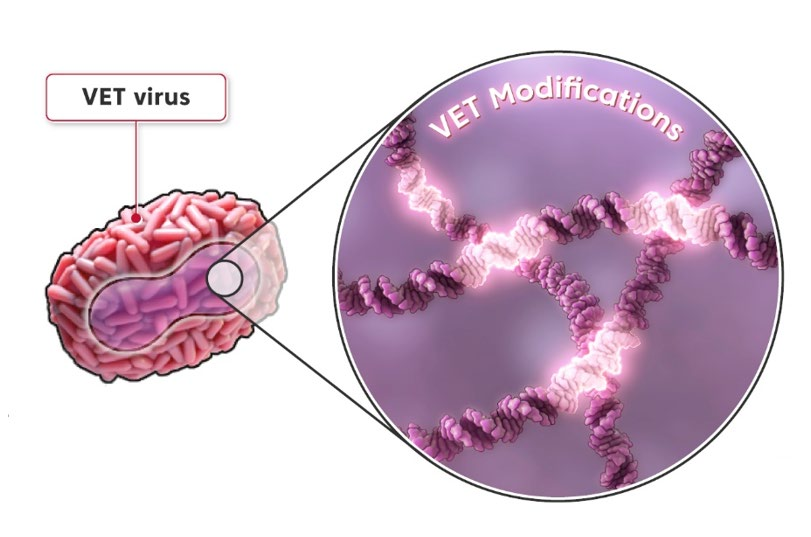
How VET3-TGI works
Three complementary mechanisms, one therapy
Destroy tumor cells
Tumor-selective replication destroys cancer cells and releases antigens and danger signals, designed to turn “cold” tumors “hot.”
Counter immune suppression
A novel TGF-β inhibitor is designed to remodel the tumor microenvironment and reopen tumors to immune cells.
Activate T cells
Local IL-12 expression is designed to drive potent, synergistic T-cell activation.
STEALTH-001
A Phase 1/1b study of VET3-TGI, alone and with atezolizumab, in patients with advanced solid tumors.
Pipeline
One platform, multiple solid tumors
One scalable platform, led by VET3-TGI, in development by intratumoral and intravenous delivery, alone and with atezolizumab.